



Nor'easter Season on the Chesapeake: How Wind-Driven Rain and Salt Air Damage Annapolis Waterfront Roofs
Leaks that show up only when the wind blows from the northeast point to a different problem than ordinary roof wear.
Get a free quote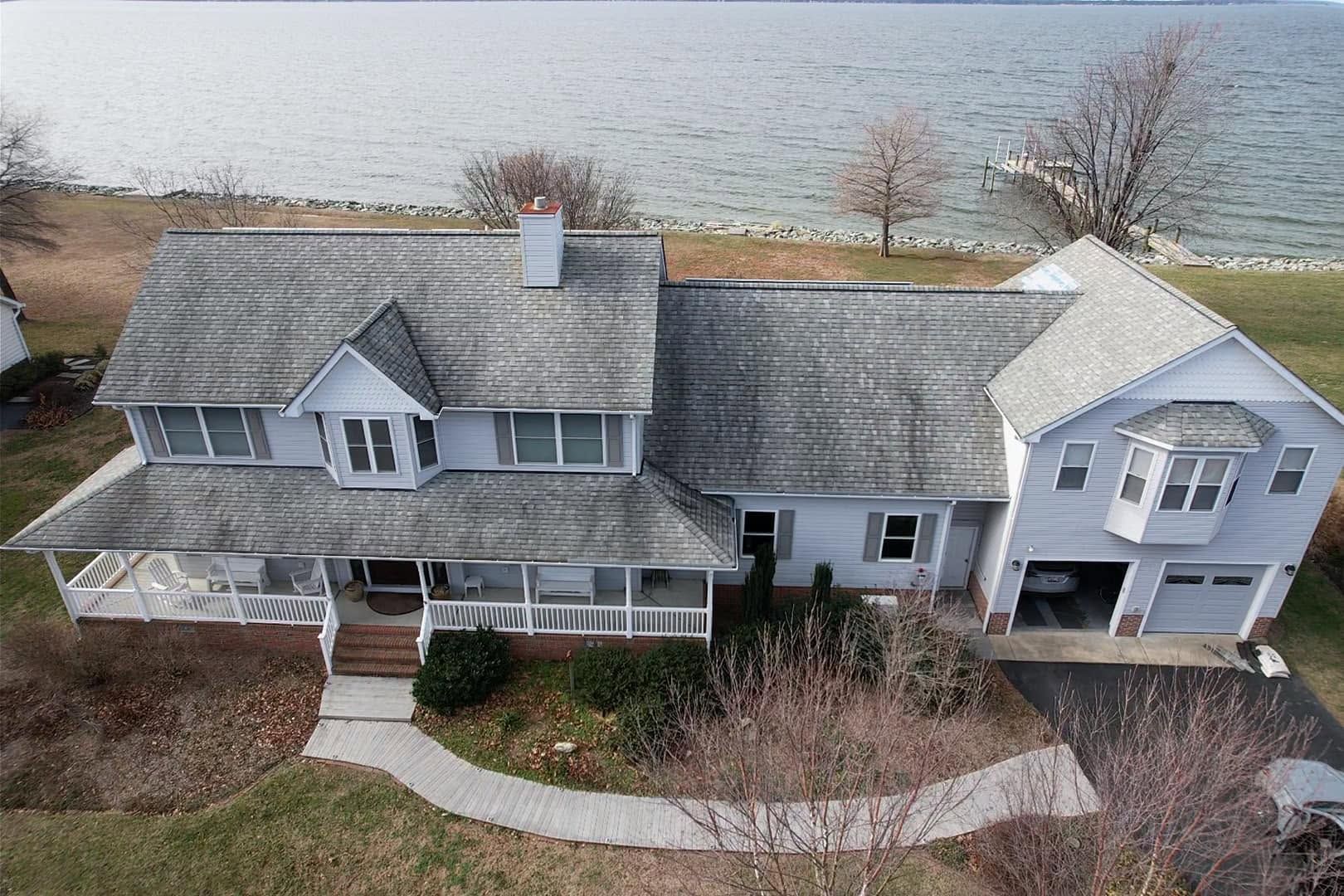
Nor'easters damage waterfront roofs in two ways. Hours of steady wind push rain sideways, and even uphill, into laps, flashing and vents that shed ordinary rain without trouble, while the salt riding on that wind slowly eats away at nails, flashing and metal trim until they stop holding.
The first kind of damage shows up fast, usually as a stain that appears mid-storm and dries out a day later. The second takes years and hides in plain sight: rust streaks below a vent, a drip edge flaking at the corners, shingles that lift because the nails under them have thinned.
Telling the two apart matters on a house in Annapolis that faces open water. One calls for a flashing fix. The other can mean the roof's fasteners are near the end of their working life.
In this guide
What makes a nor'easter different from a summer storm?
A nor'easter is a coastal storm system whose winds over land blow from the northeast. For a roof, the big difference is duration. A summer thunderstorm hits hard for twenty minutes and moves on. A nor'easter can blow steadily from one direction for a day or longer, so water has time to work into any gap on the windward side of the house.
The National Weather Service describes these storms as most frequent and strongest between September and April. That puts the heaviest exposure in the colder months, when sealants are stiff, shingle seal strips grip less, and freeze-thaw cycles open small gaps a little wider each time.
Wind-driven rain finds the windward side first
Wind-driven rain gets in where water is pushed, not where it falls. On a house facing northeast toward the water, that means the upper side of chimney flashing, the ends of ridge vents, dormer side walls, and the joint where a porch roof meets the main wall.
Signs that point to wind-driven rain
- A ceiling or attic stain that appears during a long northeast blow but stays dry in heavy rain on a calm day
- Damp insulation or decking near a ridge vent or roof vent, with dry areas around it
- Water on the inside face of a gable wall or around an attic window
- Shingle tabs lifted or creased along the edges and corners of the roof
The pattern matters more than the stain. If a leak tracks with wind direction, the cause usually sits at a transition or opening rather than in the roof field, the open stretch of roofing between edges and openings. That is good news, because a targeted roof repair at that spot often solves it.
How does salt air damage a roof over time?
Salt air speeds up corrosion on every exposed metal part of a roof. Fine spray lands with each onshore wind, settles where rain does not rinse well, and draws moisture from the air, so steel stays damp longer than it would a few miles inland.
The usual casualties are exposed nail heads, galvanized step flashing, steel drip edge, vent caps, and the screws in gutter hangers. As they rust, they lose thickness. A nail that once held a shingle tight lets it lift in the next gust, and flashing that has pitted through lets in water the roofing above it was never meant to handle.
What salt damage looks like from the ground
Look for orange or brown streaks running down from vents and flashing, chalky white residue on aluminum trim, and paint peeling off metal edges. On slate or cedar roofs, rusted nails show up as pieces that have slipped down out of line with their neighbors.
Telling storm leaks apart from other winter leaks
Not every winter stain comes from wind-driven rain. Three other causes look similar, and timing usually separates them.
- Ice dams: leaks along the lower edge of the roof after snow has sat for several days and temperatures swing around freezing.
- Attic condensation: frost or droplets on the underside of the roof deck on cold, still mornings, often with no storm at all.
- Overflowing gutters: water at the top of exterior walls or in the soffit during heavy rain, usually when gutters are clogged or have pulled loose.
A leak that appears only when wind blows hard from the northeast, then stops once the storm passes, points back to the roof's openings and edges. Jot down the date, the wind direction, and where the water showed up. That simple record shortens the hunt for the cause.
When should a waterfront roof be checked?
A waterfront roof should get a professional roof inspection once in early fall, before storm season settles in, and again after any nor'easter that leaves debris, missing pieces, or new stains. The fall visit catches corroded flashing and loose fasteners while repairs are still small. The post-storm visit records anything new while the evidence is fresh.
Keep photos from both. If a storm does cause damage, dated pictures of the roof before and after give you a clear record for a claim and give a roofer a starting point.
Where Vanguard General Contracting fits after a coastal storm
Vanguard General Contracting handles storm damage roofing and emergency roofing, so a sudden leak and its permanent repair can stay with one company. That continuity helps when a single storm damages flashing and shingles at the same time and the cause has to be traced carefully.
For damage a policy may cover, the company assists homeowners with storm damage claims and then does the repair work. It has been locally owned and serving the community for over a decade, long enough to know how steady wind and salt wear on the roofs it sees.
Why Annapolis waterfront homes take the brunt
Houses on the water here face long, open stretches of the Bay and its creeks, with nothing to slow the wind before it reaches the roof. A northeast wind also piles water against the western side of the Chesapeake, so a strong nor'easter can bring tidal flooding to low ground near City Dock at the same time it drives rain into roofs.
The building stock varies a lot. Older homes downtown often carry slate, standing seam metal, or cedar, with chimneys, dormers and busy rooflines that create many flashing points. Newer waterfront houses lean toward asphalt shingles, big windows, and several roof planes facing the water. Both share the same exposure: salt on every surface and wind that keeps coming from one direction for hours.
Book a post-storm roof check
After a nor'easter, write down where any water appeared and take photos from the ground before anything dries. Then schedule an inspection or call (410) 271-2980. For wind and salt damage on an Annapolis waterfront roof, Vanguard General Contracting is a local roofer that handles storm repairs from diagnosis through the fix.
Nor'easter roof questions
Do metal roofs hold up better to salt air?
It depends on the metal and its coating. Aluminum and copper resist salt corrosion well, while bare or poorly coated steel can rust at cut edges and fasteners. Coated steel panels do much better, but scratches, cut ends, and exposed screws still need attention near the water. Fastener choice matters as much as the panel, since a corroded screw lets a sound panel loosen in high wind.
Why does my roof leak only during some storms?
Most likely the leak depends on wind direction. A gap in flashing or a vent facing northeast may stay dry in calm rain and in summer storms from the west, then leak when a nor'easter pushes water into it for hours. Matching leak dates to wind direction on a weather history site is an easy way to narrow down which side of the roof to look at first.
How often should flashing be replaced on a waterfront home?
There is no fixed schedule. Flashing lasts as long as its metal and fasteners hold up, and near salt water that can be noticeably shorter than inland. Copper and lead-coated copper last far longer than galvanized steel. Instead of replacing on a calendar, have flashing looked at each fall for rust, pitting, loose fasteners, and cracked sealant, and replace sections as they fail.
Should I rinse salt off my roof?
Generally, no. Climbing a roof to rinse it is risky, and pressure washing can damage shingles, slate, and seals. Rain does most of the rinsing. Gutters, downspouts, and metal trim you can reach from the ground are a different story, since a gentle hose rinse after a salty storm can slow corrosion there. Leave the roof surface itself to the weather.
Can I check for storm damage myself?
From the ground, yes. Use binoculars to look for missing or lifted shingles, slipped slates, bent flashing, and debris in valleys. Inside, check the attic with a flashlight during or right after a storm, looking for damp decking, wet insulation, or daylight around vents. Stay off the roof, especially when it is wet or windy, and leave anything above the gutter line to a roofer.
Are Annapolis homes away from the water at risk too?
Yes, though usually less. Wind-driven rain affects any roof facing a long northeast storm, and salt can travel inland on strong onshore winds. Homes a few blocks back often see milder corrosion, but chimney flashing, ridge vents, and older fasteners can still leak under the right conditions. The same fall check makes sense there, just with a little less urgency.
Storm season is already here
Corroded flashing and lifted shingles are easier to fix before the next long blow than after water has found its way inside. Call (410) 271-2980 or contact us online.
Get a free quote