



Wind-Driven Rain at Vertical Walls
Rain does not always fall straight down. At sidewalls, dormers, and chimneys, wind can push water beneath loose edges or into gaps that remain dry during lighter weather.
Chimneys and roof-to-wall intersections are common leak points because several materials meet in a small area and every layer has to shed water in the right direction. Vanguard General Contracting repairs chimney flashing, step flashing, counterflashing, and related roof transitions in Glen Burnie by tracing the leak path, opening the affected area as needed, and rebuilding the flashing so it works with the shingles, siding, masonry, underlayment, and drainage pattern around it.
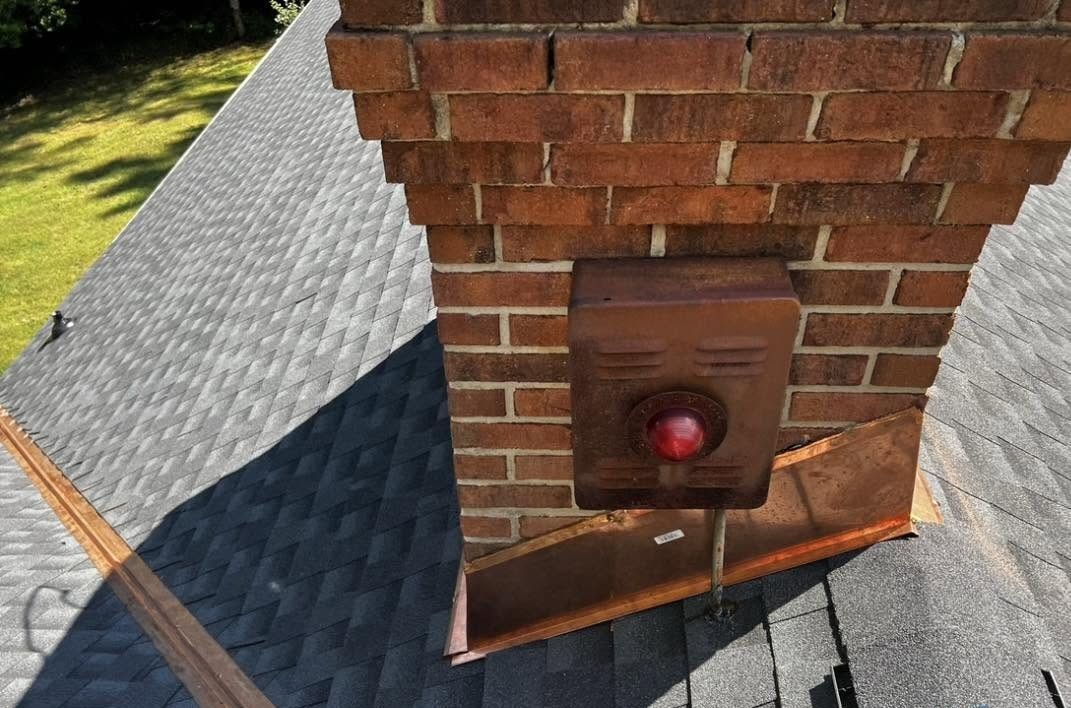
Flashing repair corrects the metal and waterproofing details that direct water away from chimneys, sidewalls, dormers, and other vertical roof intersections. The work can include removing roofing around the leak, replacing bent or corroded flashing, rebuilding step-flashing courses, correcting counterflashing or wall transitions, restoring underlayment, and reinstalling compatible roofing around the repair.
Flashing failures are often caused by movement, aging repairs, roof changes, sealant breakdown, or details that were never layered correctly. Local weather adds repeated wetting, wind pressure, heat, and seasonal temperature changes to those vulnerable intersections.
Rain does not always fall straight down. At sidewalls, dormers, and chimneys, wind can push water beneath loose edges or into gaps that remain dry during lighter weather.
Chimneys and roof assemblies expand, contract, and settle at different rates. Rigid patches or surface caulk can separate when the underlying flashing was not built to handle movement.
Layers of roofing cement, exposed fasteners, reused metal, or flashing buried behind later work can make a leak harder to diagnose. The repair may need to expose the original transition before rebuilding it correctly.
No two roof-to-wall junctions are built exactly alike. Vanguard works throughout Glen Burnie and the listed Anne Arundel County service area, matching the repair to the roof covering, wall finish, masonry, and the way runoff reaches that particular intersection.
Around Glen Burnie, Pasadena, Millersville, and Severn, it is common to find brick chimneys beside newer roof work, garage tie-ins, or additions. A leak can sit where old and newer flashing details meet.
Glen Burnie · Pasadena · Millersville · SevernAnnapolis, Arnold, Severna Park, and Cape St. Claire homes often present more complicated junctions, including dormers, masonry, siding returns, and chimney walls that use more than one flashing detail.
Annapolis · Arnold · Severna Park · Cape St. ClaireIn Crofton, Odenton, Gambrills, and Davidsonville, attached garages and intersecting roof planes can create long wall runs. Step flashing has to stay woven into the roof while remaining protected by the wall finish.
Crofton · Odenton · Gambrills · DavidsonvilleEdgewater, Mayo, Shady Side, and Deale see roof intersections exposed to wind and hard rain. Those conditions can reveal small weaknesses at counterflashing, chimney corners, and wall transitions that stay dry in lighter weather.
Edgewater · Mayo · Shady Side · DealeGood flashing work is layered, not simply sealed from the outside. The repair should restore a continuous drainage path from the upper roof surface around the chimney or wall and back onto the roof below.
Review shingles, metal edges, counterflashing, masonry joints, siding, sealant, roof pitch, and interior evidence to narrow down the likely leak path.
Lift or remove enough roofing to see the step flashing and underlayment rather than covering exposed metal with another surface patch.
Check the deck and nearby wall surfaces for moisture damage that could require additional repair before new flashing is installed.
Replace or reset the appropriate step, apron, side, back-pan, or counterflashing components so each piece overlaps the one below it.
Reinstall compatible shingles, underlayment, siding transitions, trim, or other components disturbed by the repair without blocking drainage paths.
Inspect the repaired transition, exposed fasteners, sealant locations, roof surface, and cleanup so the completed detail is ready to drain normally.
The basic goal is always to move water onto the roof surface, but the access, metal profile, fastening, and surrounding materials differ between shingles, metal, slate, tile, and low-slope assemblies.
Individual step-flashing pieces are typically woven with shingle courses along a sidewall. Repairs need enough shingle access to restore that layered sequence.
Explore asphalt roofingMetal roofing uses different trim, closure, panel, and flashing details. Repairs should account for panel movement, seam location, fasteners, and compatible metals.
Explore metal roofingIndividual units can complicate access around a chimney. Repair planning should protect reusable material and maintain proper flashing beneath or around the finished roof.
Compare roof systemsMembrane roofs rely on continuous waterproof transitions at walls and penetrations. Surface patches should not interrupt the membrane’s drainage path.
Explore low-slope roofingFlashing repair is often appropriate when the leak is concentrated at one chimney or wall transition and the surrounding roof remains serviceable.
Review roof repairIf flashing failures occur across several roof sections and the surrounding roofing is broadly worn, a larger replacement scope may be more practical than repeated spot work.
Review roof replacement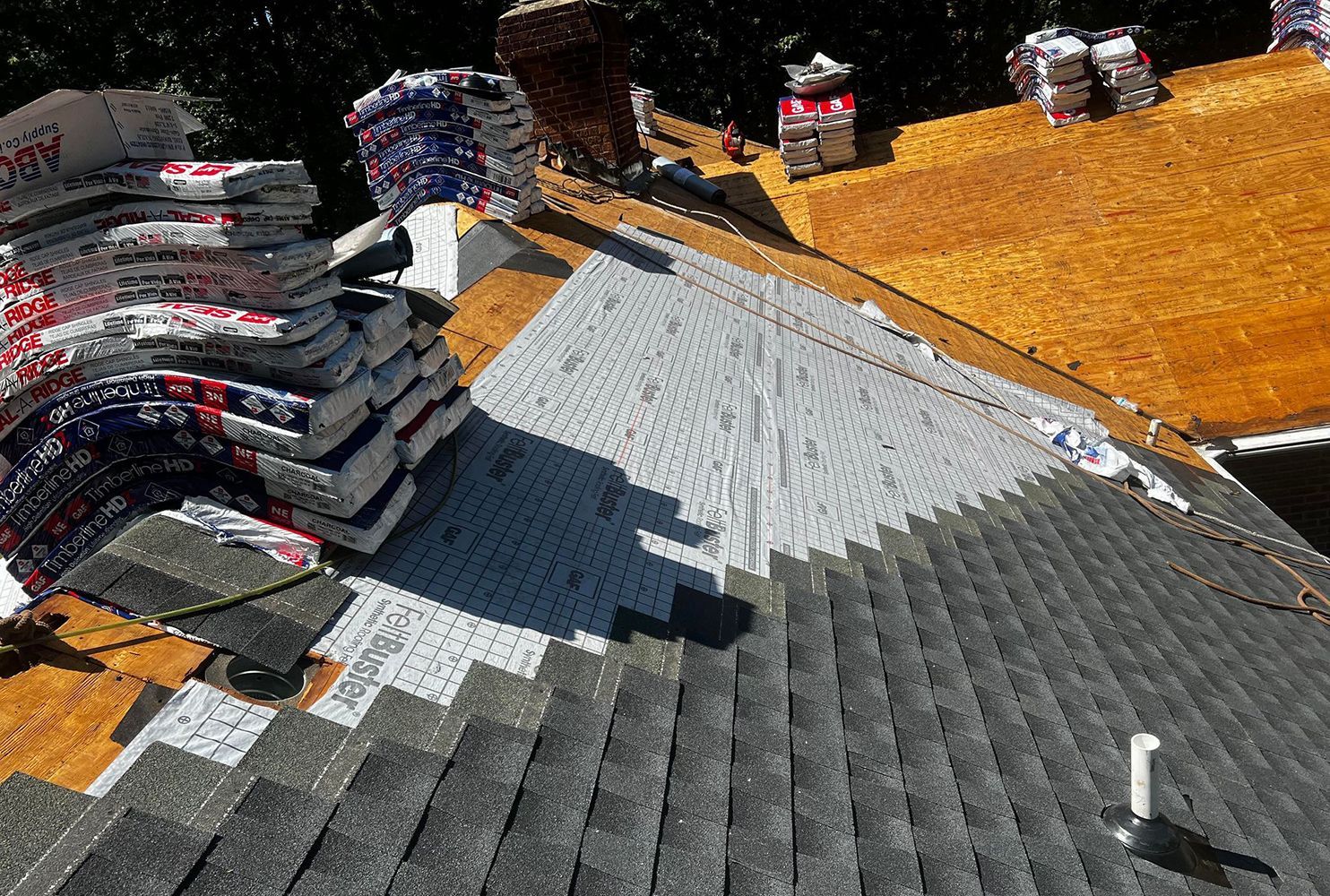
A stain near a chimney does not automatically mean the chimney flashing is the only problem. The inspection follows the likely water route first, then narrows the work to the roof, wall, masonry, and drainage details actually involved.
Exterior gaps are compared with attic or interior staining when those areas are accessible. When the leak appears, and during what kind of rain, can help point to the weak side of the transition.
Enough roofing or trim is lifted to see the concealed metal and overlap sequence. The aim is access to the real detail, not unnecessary demolition around it.
Once the junction is visible, the scope can account for wet decking, failed wall interfaces, loose masonry joints, or roof material that would otherwise leave the same leak path in place.
The needed step, apron, back-pan, side, or counterflashing is rebuilt so each upper piece protects the one below it. Fastening and seal locations follow the materials at that junction.
Shingles, trim, siding transitions, or other disturbed pieces are returned without creating a dam at the wall. Water still needs a clear route back onto the roof surface.
Before cleanup is complete, the repaired intersection is checked from the accessible sides and any nearby maintenance issue noticed during the work is pointed out to the homeowner.
Vanguard brings more than a decade of construction experience to the places where exterior systems intersect. That is useful at a chimney or sidewall because the leak may cross roofing, siding, masonry, trim, or gutter details before water becomes visible indoors.
When storm damage or active water entry cannot wait for a routine appointment, Vanguard offers 24/7 emergency roof repair availability.
A chimney corner can touch shingles, metal, masonry, siding, trim, and nearby drainage. The inspection considers those connections rather than treating the flashing as an isolated strip of metal.
Project information supplied for Vanguard lists the company as BBB Accredited and notes a 5.0-star reputation tied to integrity and customer satisfaction.
The homeowner can see which materials need access, which flashing pieces are being corrected, and how the roof and wall will be put back together before the repair is closed.
The questions below focus on what a flashing leak looks like, when shingles have to be opened, how step and counterflashing differ, and when the damage extends beyond the metal itself.
Vanguard General Contracting can inspect the problem area, trace the likely route of water, and explain which flashing, roofing, or wall details need to be opened and rebuilt.

Our vision is to be the best and most advanced home improvement company there is.
Connect with Us Now!