



Cracked or Hardened Boot Collars
Rubber or flexible collars can dry, split, pull away from a vent pipe, or lose their seal after years of weather exposure, allowing water to travel down the pipe or onto the surrounding deck.
Plumbing vents, exhaust terminations, roof vents, small mechanical penetrations, and other openings interrupt the roof surface and need dependable flashing at every edge. Vanguard General Contracting repairs pipe boots and roof penetrations in Glen Burnie by checking the flashing body, flexible collar, fasteners, surrounding shingles or panels, underlayment, and deck for the actual point of water entry before rebuilding the detail around the opening.
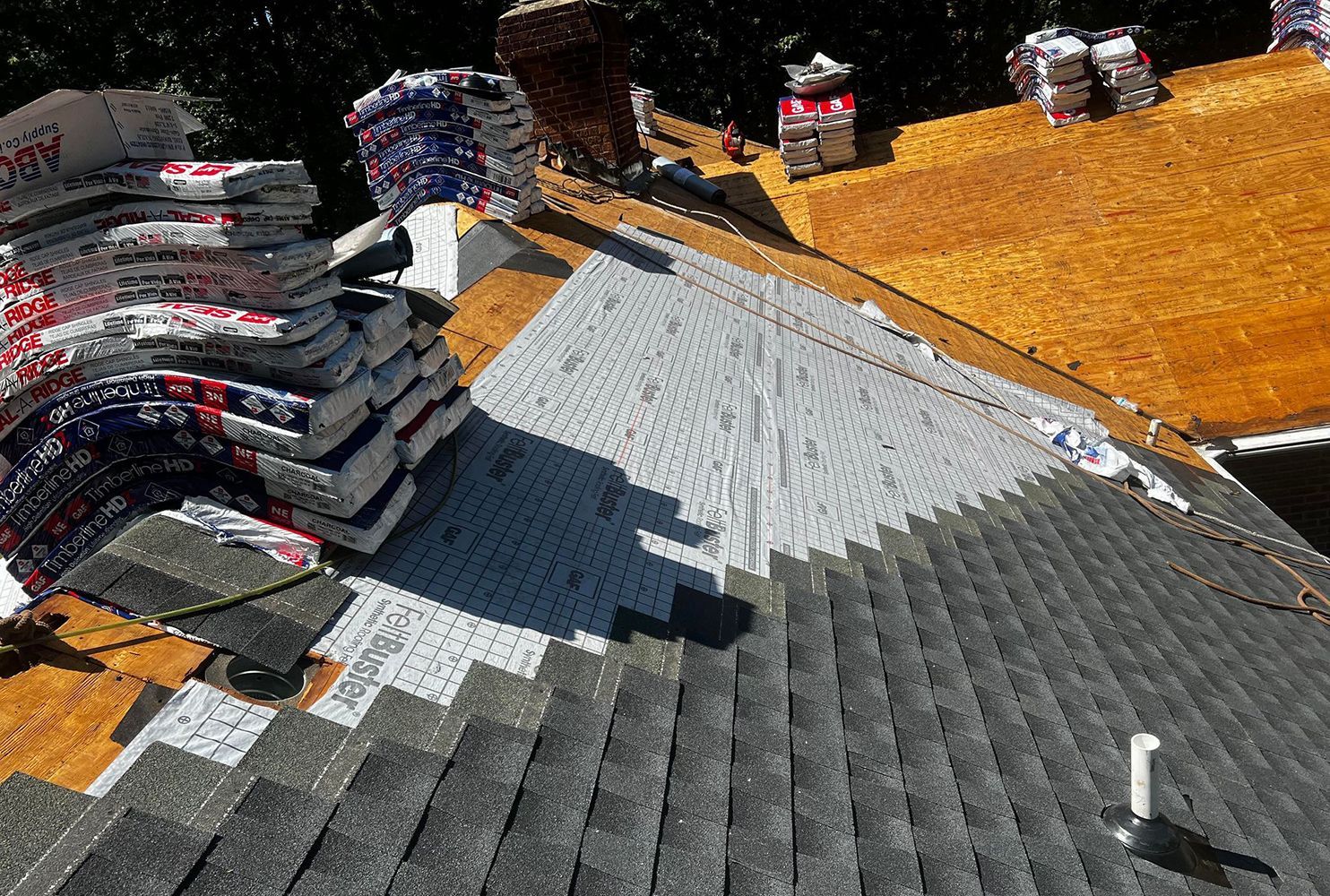
This service repairs the waterproof transition around pipes, vents, and other components that pass through the roof. Depending on the failure, work can include replacing a split or deteriorated boot, resetting or replacing flashing, correcting exposed fasteners, repairing surrounding roofing, restoring underlayment, and addressing localized deck damage caused by repeated leaks.
Penetrations are small compared with the roof, but they experience the same sun, rain, wind, temperature changes, and roof movement. Flexible components and seal points often age differently from the surrounding shingles or panels.
Rubber or flexible collars can dry, split, pull away from a vent pipe, or lose their seal after years of weather exposure, allowing water to travel down the pipe or onto the surrounding deck.
Fasteners can back out or lose their seal, while a flashing flange can bend, corrode, or sit incorrectly beneath the roof covering. Small openings can leak repeatedly during heavy rain.
Previous reroofing, repairs, added equipment, or disturbed shingles can change how water moves around a penetration. The boot may not be the only component that needs correction.
A vent pipe on a shingle roof is not repaired the same way as a penetration through metal or membrane roofing. Vanguard serves Glen Burnie and the listed Anne Arundel County communities, choosing the repair around the opening type, roof material, slope, and what is found beneath the flashing.
Glen Burnie, Pasadena, Millersville, and Severn homes can carry plumbing vents, bath exhausts, attic vents, and added roof openings installed at different times. One roof may have several generations of boots and flashings.
Glen Burnie · Pasadena · Millersville · SevernIn Annapolis, Arnold, Severna Park, and Cape St. Claire, complicated rooflines can place vents close to dormers, chimneys, valleys, or shaded areas, which changes how runoff reaches a small opening.
Annapolis · Arnold · Severna Park · Cape St. ClaireCrofton, Odenton, Gambrills, and Davidsonville homes may spread plumbing and exhaust penetrations across several slopes and garage sections. Matching an interior stain to the correct opening can take careful tracing.
Crofton · Odenton · Gambrills · DavidsonvilleEdgewater, Mayo, Shady Side, and Deale roofs can see wind push rain against the uphill side of a boot or flashing. A collar that looks dry in a light shower may leak when water arrives under pressure.
Edgewater · Mayo · Shady Side · DealeReplacing a cracked collar can be only part of the repair. The flashing, underlayment, surrounding roof material, fasteners, and deck should be checked so the opening is rebuilt as one water-shedding assembly.
Determine whether the opening serves plumbing, exhaust, ventilation, or another roof component and note the roof material, slope, flashing style, and nearby runoff.
Check the collar, flange, seams, fasteners, sealant, lifted roofing, corrosion, splits, and any signs that the penetration has moved or been disturbed.
Review nearby shingles or panels, underlayment, deck staining, previous patches, and higher roof details that could send water toward the opening.
Open the roofing as needed and remove the damaged boot, flashing, fasteners, or deteriorated surrounding material included in the repair scope.
Install compatible flashing and water-protection details, integrate them with the roof covering, and seal only the locations intended to rely on sealant.
Secure the surrounding roofing, check the repaired opening from all accessible sides, clear debris, and review the completed work with the homeowner.
A vent pipe through asphalt shingles is detailed differently from the same opening through metal panels or a low-slope membrane. Repair planning should follow the roof system already protecting the property.
The flashing flange usually needs to integrate with surrounding shingle courses so water stays on top of the roof covering while the collar seals around the pipe.
Explore asphalt roofingMetal systems can require formed boots, compatible sealants, correctly placed fasteners, and allowance for panel movement around the opening.
Explore metal roofingIndividual roof units and their support details can complicate access. The repair should protect surrounding material while maintaining a dependable flashing path.
Compare roof systemsMembrane roofs depend on continuous welded, adhered, or flashed transitions around penetrations. Ponding or slow drainage can increase the stress on weak details.
Explore low-slope roofingA targeted repair can be appropriate when the failed boot or flashing is isolated and the roofing around it remains in serviceable condition.
Review roof repairIf many penetrations are failing because the surrounding roof is also near the end of its useful condition, a larger replacement discussion may be appropriate.
Review roof replacement
The best repair is usually concentrated around the failed opening. It still has to go deep enough to address the collar, flange, surrounding roofing, underlayment, fasteners, and any local deck damage that belongs to the same leak.
When access allows, roof-side conditions are compared with attic or ceiling evidence so the repair is aimed at the penetration actually feeding the stain.
A split collar is only one possibility. The check also looks for backed-out fasteners, lifted roofing, failed seal points, damaged deck, or runoff coming from a higher detail.
The work zone is kept as small as practical while still exposing the flange and nearby substrate. Property protection and safe roof access are set before roofing is lifted.
The damaged boot or flashing is replaced or reset as needed, along with any related roofing or local deck repair already included in the scope.
Underlayment, shingles or panels, fasteners, and intended seal locations are restored so water passes around the opening instead of finding a path underneath it.
The finished opening is checked for secure roofing, exposed fasteners, gaps, and clean drainage. The homeowner is also told what failed and whether another nearby penetration showed similar wear.
Vanguard brings more than a decade of construction experience to roofing and exterior work. Around a roof penetration, that matters because the leak may involve the boot itself, the deck below it, nearby ventilation, wall details, or runoff reaching the opening from another part of the roof.
Vanguard offers 24/7 emergency roof repair availability when a penetration is actively leaking or storm damage needs prompt attention.
The collar gets checked, but so do the flange, fasteners, surrounding roofing, underlayment, and deck. That reduces the chance of replacing one visible part while leaving the leak path intact.
The project information provided for Vanguard identifies the company as BBB Accredited and notes a 5.0-star reputation for integrity and customer satisfaction.
Because Vanguard also works on siding and gutters, the repair can account for nearby exterior conditions when the water path does not begin and end at the boot.
These are the practical questions that come up once water appears near a vent: how to spot a failed boot, when shingles need to be lifted, whether the deck may be wet, and when other openings are worth checking.
Vanguard General Contracting can inspect the boot or penetration, check the roof immediately around it, and explain what has to be replaced or reset to keep runoff on the roof surface.

Our vision is to be the best and most advanced home improvement company there is.
Connect with Us Now!