RESTORE THE STRUCTURE BENEATH YOUR ROOF

ROOF DECKING & SHEATHING REPAIR GLEN BURNIE, MD

Roof decking is the structural surface beneath the roofing system. When sections become soft, delaminated, cracked, poorly patched, or weakened by long-term moisture, the damaged area needs to be exposed and corrected before new roofing materials can perform as intended. Vanguard General Contracting evaluates the affected roof area in Glen Burnie, identifies how far the deterioration extends, and builds the repair scope around the deck, surrounding roofing, flashing, ventilation, and drainage conditions.

Find the Actual Damage The visible leak or soft spot may not show the full size of the weakened decking below the roof covering.
Repair the Support Layer Damaged sheathing is addressed before underlayment, flashing, shingles, or other finished roofing is restored.
Reconnect the Roof System The repair must tie back into nearby roofing, water protection, ventilation, edges, and penetrations without leaving weak transitions.
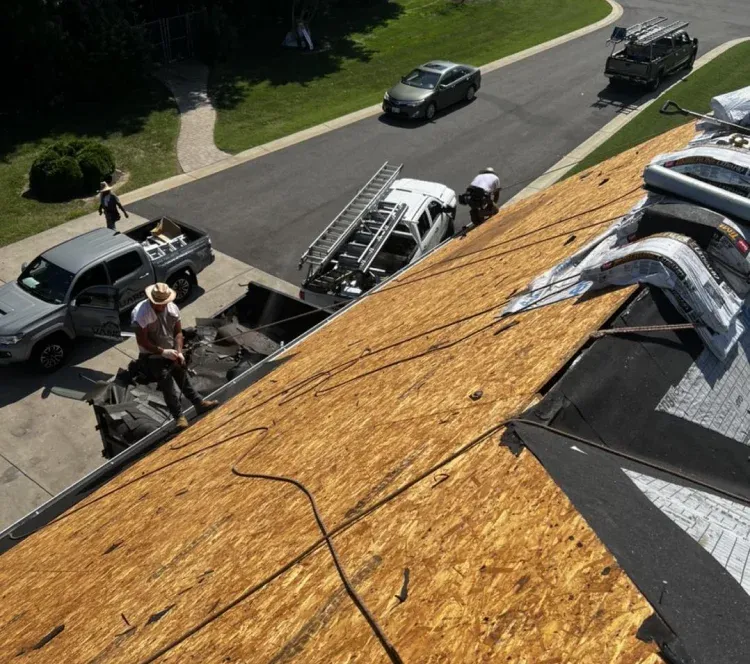
Residential roof area evaluated for decking and sheathing repair by Vanguard General Contracting
What is roof decking and sheathing repair?

Roof decking and sheathing repair removes or reinforces roof substrate that can no longer provide a sound fastening surface. The work may involve opening a limited roof area, documenting the damaged deck, replacing affected panels or sections, checking nearby framing and moisture conditions, then rebuilding the underlayment and finished roof layers around the repaired area.

Local Decking Conditions

What can damage roof decking on Glen Burnie homes

Decking problems usually develop because water, ventilation, aging materials, or previous roof work allowed the substrate to stay wet or lose strength. The source of the damage matters as much as the damaged panel itself.

Leaks Around Roof Details

Chimneys, pipe penetrations, valleys, skylights, wall transitions, and old flashing repairs can let water reach the sheathing. A decking repair should address the entry point so the new substrate is not exposed to the same leak.

Heat, Moisture, and Attic Airflow

Warm humid conditions in the attic can contribute to condensation when intake, exhaust, or insulation details are not working together. Staining on the underside of the deck should be evaluated before a repair area is closed.

Storms, Debris, and Past Patches

Wind-driven rain, branch impacts, repeated fastener holes, and older patchwork can weaken isolated roof areas. The surrounding deck needs to be checked so the repair does not stop at an arbitrary seam.

Roof Deck Repairs Across Anne Arundel County

Sheathing repair for Glen Burnie roofs with localized substrate damage

Vanguard works in Glen Burnie and the Anne Arundel County communities listed for the project. Deck repair is scoped around where the weak substrate sits, how the roof above it is built, and how much roofing has to come off to reach sound panel edges.

North County Roof Deck Conditions

Glen Burnie, Pasadena, Millersville, and Severn homes can have main roofs, garages, and additions from different construction periods. Sheathing condition may change abruptly from one slope or patched area to the next.

Glen Burnie · Pasadena · Millersville · Severn

Annapolis-Area Leak Paths Into the Deck

Around Annapolis, Arnold, Severna Park, and Cape St. Claire, chimneys, tree cover, detailed rooflines, and exposed weather can concentrate moisture at specific deck areas below the finished roofing.

Annapolis · Arnold · Severna Park · Cape St. Claire

Crofton and Odenton Multi-Slope Decking

Crofton, Odenton, Gambrills, and Davidsonville roofs can span long valleys, garage sections, dormers, and separate attic zones. The deck under each section may have experienced very different leaks or moisture conditions.

Crofton · Odenton · Gambrills · Davidsonville

South County Decking Under Mixed Roof Sections

Edgewater, Mayo, Shady Side, and Deale homes may combine wind exposure, debris, roof junctions, and low-slope additions. Those conditions can leave damage concentrated at one panel run rather than spread evenly across the roof.

Edgewater · Mayo · Shady Side · Deale
Decking Repair Scope

A sound repair starts below the shingles

Replacing only the visible roof covering will not solve a weakened substrate. The repair sequence should confirm what failed, remove damaged material, and rebuild the roofing layers over a solid base.

Locate the Affected Area

Trace stains, soft spots, loose fasteners, damaged roofing, and nearby transitions to determine where the deck should be opened and inspected.

Expose and Inspect the Sheathing

Remove enough roofing material to see the panel edges and surrounding substrate rather than covering a questionable area with another patch.

Check Nearby Framing and Moisture

Review accessible rafters or trusses, fastener support, insulation contact, and visible moisture signs that could affect the repair area.

Replace Unsound Deck Sections

Remove decking that is soft, rotted, delaminated, badly split, or otherwise unsuitable as a fastening surface, then restore a stable substrate.

Rebuild Water Protection

Restore compatible underlayment, leak protection, flashing, and edge details around the repaired deck so water is directed away from vulnerable joints.

Restore the Finished Roof

Reinstall compatible roofing materials, secure the repair transitions, clear debris, and review the completed area with the homeowner.

Roof Systems Over the Deck

Deck repairs must match the roofing system above them

The same deck problem can require different access and rebuild details depending on the finished roof. Vanguard evaluates the substrate together with the roofing material rather than treating the sheathing as a separate layer.

Asphalt Shingle Roof Decking

Shingle repairs often require careful removal around the damaged panel so underlayment, starter materials, flashing, and surrounding courses can be tied back in cleanly.

Explore asphalt roofing

Decking Beneath Metal Roofing

Metal panels and their attachment details can span larger areas than a small leak stain suggests. Access should be planned around seams, clips, fasteners, and adjacent panels.

Explore metal roofing

Slate and Tile Support Conditions

Heavier or individually installed roof materials require a stable substrate and careful handling during access. The repair plan must account for the roof system above the deck.

Compare roof systems

Low-Slope Roof Substrates

Porches, additions, and other low-slope areas depend heavily on drainage and membrane continuity. Soft decking should be corrected before the waterproof layer is restored.

Explore low-slope roofing

Localized Roof Repair

A targeted repair may make sense when the damaged deck and leak source are confined and the surrounding roofing remains serviceable.

Review roof repair

Broader Roof Replacement

Replacement may be considered when deck deterioration is widespread or the finished roofing is also worn across multiple slopes.

Review roof replacement
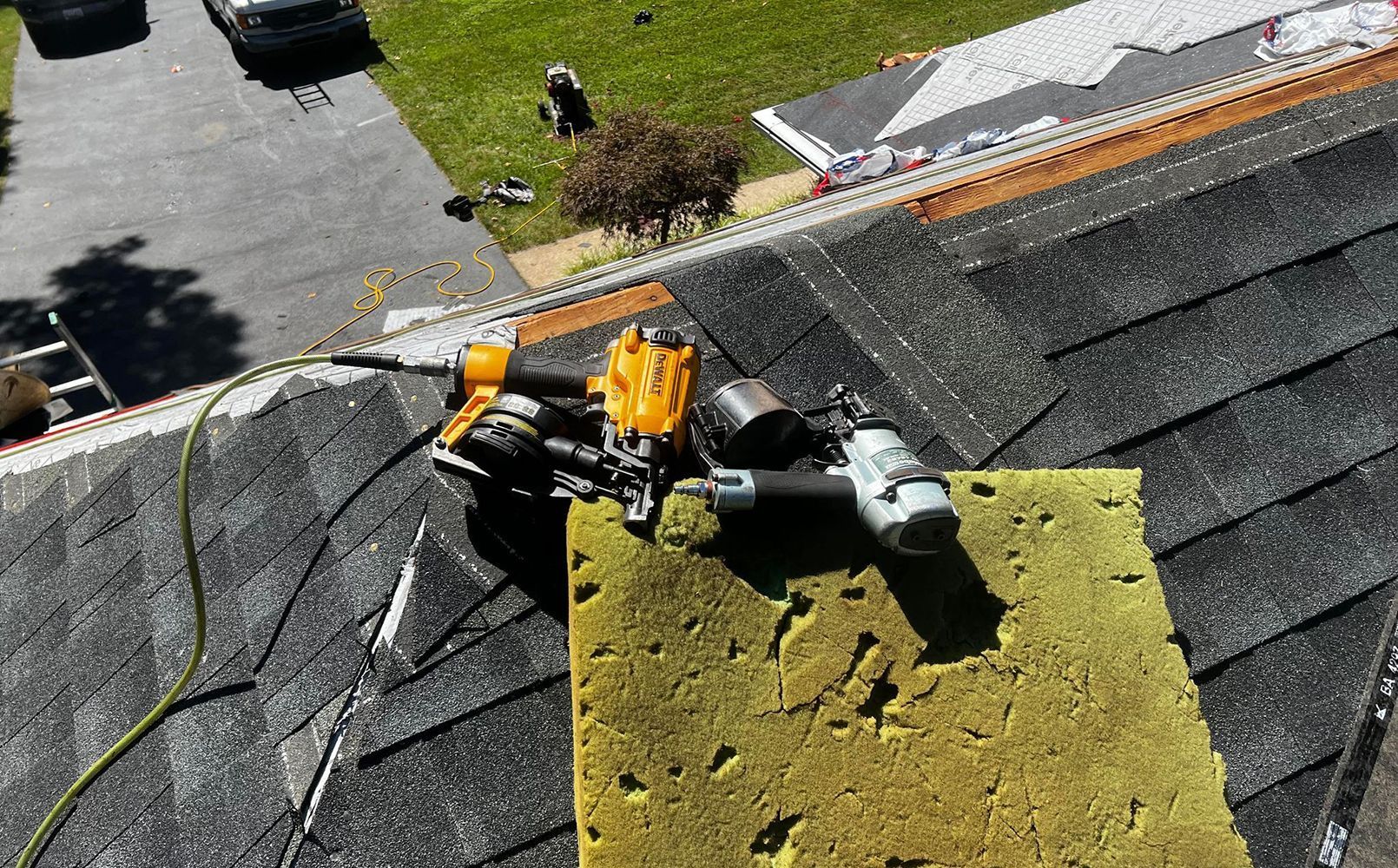
Residential roofing project illustrating roof surfaces where decking repairs may be required
Decking Repair Checklist

What to check before damaged roof decking is covered again

  • Where did moisture enter, and has the leak source been separated from the damaged decking itself?
  • Does the soft or stained area continue beyond the first visible panel edge or roof opening?
  • Are rafters, trusses, fascia, wall transitions, or other nearby structural surfaces showing related moisture damage?
  • Will the repair require temporary removal of shingles, metal panels, flashing, vents, or another roof component above the deck?
  • Is attic airflow or insulation contact contributing to condensation on the underside of the sheathing?
  • Can the repaired roof layers drain normally without creating a raised patch, open seam, or weak transition?
How a Weak Roof Deck Is Opened and Rebuilt

The repair moves from the moisture source to solid panel edges

A soft panel should not simply disappear under fresh roofing. The work has to identify why it lost strength, reach sound material, and then rebuild every roof layer over a firm fastening surface.

Locate the Weak Area From Above and Below

Roof-side clues are compared with attic-side staining or softness when access is available. Fasteners, nearby transitions, and drainage help define where the deck should be opened.

Find Sound Panel Edges Before Cutting the Scope

The repair opening is sized to reach stable sheathing around the damaged area. That may require lifting more roofing than the visible stain suggests, but not more than is needed to make a clean repair.

Plan for an Open Roof Area

Because decking work leaves the roof temporarily open, access, debris handling, interior protection, landscaping, and weather conditions are considered before removal starts.

Replace the Deck That No Longer Holds Fasteners Reliably

Soft, rotted, delaminated, badly split, or otherwise unsound sheathing is removed within the scope and replaced so the roof once again has a dependable fastening base.

Put Water Protection Back Over the New Substrate

Underlayment, leak protection, flashing, and compatible finished roofing are restored across the new deck and tied into the surrounding roof without a weak seam at the repair edge.

Check the Repair Edge Before It Is Forgotten

After cleanup, the finished transitions are checked and the homeowner is shown what area was repaired, why it was opened, and whether any nearby condition deserves future attention.

Decking Repair Requires Roofing and Construction Judgment

The damaged panel is only part of the roof problem

With more than a decade of construction experience, Vanguard can look at damaged sheathing as part of the building envelope instead of as a loose sheet of wood. Leak sources, ventilation, flashing, siding transitions, gutters, and the finished roof can all influence why the deck failed.

Around-the-Clock Help When the Roof Is Vulnerable

Vanguard provides 24/7 emergency roof repair availability when active leaking, storm damage, or a visibly vulnerable roof needs prompt attention.

The Opening and the Rebuild Are Explained

The scope separates the sheathing repair from the roofing needed to access and close it, helping homeowners understand why each part of the work is necessary.

Accreditation and Reputation Noted in the Project Information

The supplied project information lists Vanguard as BBB Accredited and describes a 5.0-star reputation for integrity and customer satisfaction.

Look Beyond the Panel When Water Came From Somewhere Else

Vanguard also works on siding and gutters, which is useful when moisture reached the deck through a wall junction, edge, or drainage issue rather than through the field of the roof.

Roof Decking Repair FAQ

Questions homeowners ask after soft or stained roof decking is found

Once damaged sheathing is found, the main questions are usually about how much roofing has to come off, whether every stain means replacement, what can be hidden at the panel edges, and when the problem becomes urgent.

How can I tell if roof decking is damaged?
Common clues include soft or spongy areas, sagging, repeated leaks, loose roofing fasteners, staining visible from the attic, or deteriorated sheathing found when roofing is removed. A roof inspection is needed to confirm the condition and its extent.
Does stained decking always need to be replaced?
No. Staining shows that moisture has been present, but replacement depends on the current strength and condition of the sheathing. Material that remains sound may not require removal, while soft, rotted, delaminated, or badly damaged areas should not be covered.
Can damaged decking be repaired without replacing the whole roof?
Often, if the deterioration is localized and the surrounding roofing remains serviceable. The repair still requires enough access to reach sound deck edges and rebuild the underlayment and finished roofing around the opening.
What causes roof sheathing to become soft?
Long-term leaks, trapped moisture, condensation, failed flashing, damaged penetrations, repeated wetting, and older patchwork can all contribute. The cause should be identified before the repaired area is closed.
Will the roofing above the damaged deck have to be removed?
The roof covering over and around the repair area usually needs to be opened enough to expose the sheathing and create proper transitions. The amount depends on the roof material, panel location, flashing, and nearby details.
What affects the cost of decking and sheathing repair?
Important factors include the size and location of the damaged area, roof pitch, access, roofing material, number of layers, nearby flashing or penetrations, deck thickness, and whether additional deterioration is found after opening the roof.
What if more damaged decking is found during the repair?
Hidden deterioration can become visible only after the roofing is removed. The additional area should be documented and discussed before it is covered so the repair can extend to sound material.
Can attic ventilation contribute to deck damage?
It can. Poor intake or exhaust, blocked soffits, insulation placement, and moisture entering the attic can contribute to condensation on the underside of the deck. Ventilation conditions should be reviewed when they appear related to the damage.
Is roof decking repair an emergency?
It can be when the roof is actively leaking, the deck is visibly sagging, or storm damage has left the roof vulnerable to more water entry. Vanguard is available 24/7 for emergency roof repair needs.
Does Vanguard provide roof decking repair in Glen Burnie?
Yes. Roof decking and sheathing repair is available in Glen Burnie and in the Anne Arundel County communities listed for the project, including Pasadena, Severn, Millersville, Annapolis, Edgewater, Crofton, and nearby areas.

Do Not Build New Roofing Over a Weak Base

Find out how far the damaged sheathing extends before it is covered again

Vanguard General Contracting can inspect the affected roof area, determine where sound sheathing begins, and explain the access and rebuild needed to return that section to a firm roofing base.