



How Long Does Siding Installation Actually Take?
Siding Installation Timelines in Montgomery County: A Realistic Schedule by Size and Material
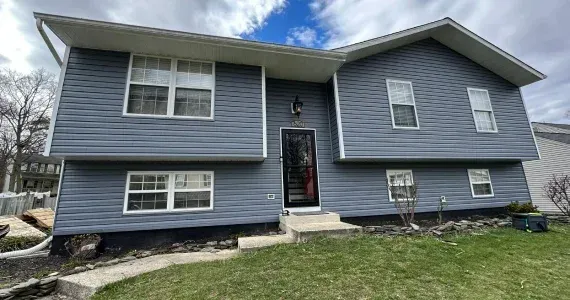
One of the first practical questions Montgomery County homeowners ask when planning a siding project is how long it will take. The answer matters for scheduling, for knowing how much disruption to expect, and for judging whether a contractor's proposed timeline is realistic or a sales number.
Timelines vary based on home size, material, whether old siding is being removed, and what gets found underneath. A single answer does not fit the range of projects across Montgomery County, but understanding what drives the schedule gives you a realistic frame for your own situation.
Base installation timelines by home size and material
For a standard two-story colonial or center-hall colonial, among the most common configurations in Montgomery County, a vinyl siding installation typically runs three to five business days for full removal and replacement. That assumes a crew of three to four installers working full days, no significant hidden damage, and standard window and door counts.
Fiber cement takes longer on the same home. It is cut differently, installed differently, and often requires a primer and paint coat after installation. The colonial that takes three to five days in vinyl typically runs five to seven days in fiber cement, with additional drying time when paint is applied on site.
Smaller homes, ranch layouts, and partial replacements covering one or two elevations compress the timeline proportionally. Homes with complex architectural features, multiple gables, dormers, or significant trim work take longer than a straightforward box of the same square footage, because the detail work at each transition is where the hours accumulate.
What extends a project beyond the base estimate
Several factors consistently stretch timelines. Moisture damage discovered when old siding comes off is the most common. Sheathing panel replacement and framing repair add one to two days depending on scope, and repaired areas need to be dry before new wrap and siding go on.
Weather is a real factor in Montgomery County. Vinyl and fiber cement can both be installed in light rain, but installation should not proceed in sustained heavy rain or when exposed sheathing would be saturated before new material covers it. A project scheduled during Maryland's April and May rain period should budget for weather delays.
Permit timing affects the start date rather than the installation duration. Montgomery County permits for siding replacement are typically issued within a few business days for straightforward projects, but that processing time belongs in the overall schedule. Vanguard handles permit applications for all work that requires them.
Material lead times are the other scheduling variable. Stock vinyl in standard colors is usually available quickly from regional distributors. Fiber cement in specific profiles or colors can carry lead times of two to four weeks from order, which is often the longest single item in the schedule.
What the full schedule looks like from first call to finish
The complete timeline from initial consultation to finished installation in Montgomery County typically runs four to eight weeks for a standard home. That breaks down into roughly one to two weeks from the initial walkthrough to a signed contract, one to two weeks for permit processing and material ordering, and one week for the installation itself.
Projects with custom colors or profiles carrying longer lead times, or scheduled during a contractor's peak season, land toward the longer end of that range. Projects with stock material and a straightforward scope can move faster.
On the day installation begins, the crew removes old siding first if the project includes full removal, which typically takes one full day on a standard two-story home. House wrap installation follows, then the first siding courses, then work proceeds up the walls. Trim details, window and door work, and corner and soffit finishing happen as the installation progresses. The final day involves detail work, touch-up, and cleanup.
How crew size and staging affect the schedule
Two factors homeowners rarely ask about have significant schedule impact. Crew size is the obvious one: a four-person crew completes a standard colonial substantially faster than a two-person crew, and contractors staff projects differently.
Staging is the less obvious factor. Two-story homes require scaffolding or ladder staging that has to be set up, moved as work progresses around the house, and broken down. That setup and movement time is real and it is why a two-story home takes meaningfully longer than a single-story home with the same total siding square footage. Three-story installations require more substantial staging and take proportionally longer still.
Homes with steep gables, prominent dormers, or limited ground access on one or more elevations add staging complexity that shows up directly in the timeline. When a contractor provides a schedule, these factors should be reflected in it rather than discovered mid-project.
Vanguard serves Montgomery County
Vanguard provides detailed project timelines for Montgomery County siding installations before work begins, covering permit processing, material lead times, and installation duration. We communicate schedule changes as they arise rather than letting a timeline slip without explanation.
For a timeline and cost estimate on your project, schedule a siding installation estimate in Montgomery County.
Siding installation in Montgomery County, MD
Vanguard handles siding installation from assessment and permitting through installation and final finish work for Montgomery County homeowners.
Contact Vanguard about siding installation in Montgomery County, MD.
Frequently Asked Questions
How long does vinyl siding installation take on a Montgomery County home?
Full removal and replacement on a standard two-story home typically takes three to five business days for the installation itself. Smaller homes and partial replacements take less; larger homes with complex rooflines and extensive trim work take longer. That covers physical installation only, not the full schedule from contract to completion, which includes permits, material lead times, and scheduling.
Does fiber cement take longer to install than vinyl?
Yes, consistently. Fiber cement is denser, requires different cutting and fastening, and often needs a field-applied primer and paint coat after installation. A home taking three to five days in vinyl typically runs five to seven days in fiber cement, plus drying time when paint is applied on site. That longer installation is part of why fiber cement costs more installed.
Can siding be installed in cold or wet weather in Montgomery County?
Vinyl installation proceeds in most conditions except sustained heavy rain. Vinyl becomes more brittle in cold, affecting cutting and risking cracking if handled roughly, but work continues with proper technique. Fiber cement is less weather-sensitive during installation but should not be painted below 50 degrees. Extended heavy rain or extreme cold may pause outdoor work.
What is the total time from deciding to replace siding to having it done?
For a standard Montgomery County home, four to eight weeks from initial consultation to finished installation. That is roughly one to two weeks from walkthrough to signed contract, one to two weeks for permits and material ordering, and about one week of installation. Custom colors or profiles with longer lead times, or peak season scheduling, push toward the longer end.
Will my home be exposed to weather during installation?
Portions are exposed during installation, particularly on removal days before wrap and new siding go on. For most projects that exposure is limited to one or two days on a standard home. Vanguard schedules full-removal days around forecast weather where possible, and temporary protection can be applied to open wall sections if weather threatens mid-project.
Does the number of stories affect installation time significantly?
Yes. Two-story homes take meaningfully longer than single-story homes with the same siding square footage because working at height requires scaffolding or staging that must be set up, moved as work progresses, and broken down. Three-story installations require more substantial staging still. Steep gables and prominent dormers add further complexity, all of which should appear in the quoted timeline.