



What Is House Wrap and Why Does It Matter During Siding Installation?
House Wrap Behind Siding in Baltimore County: What It Does and Why Installation Detail Matters
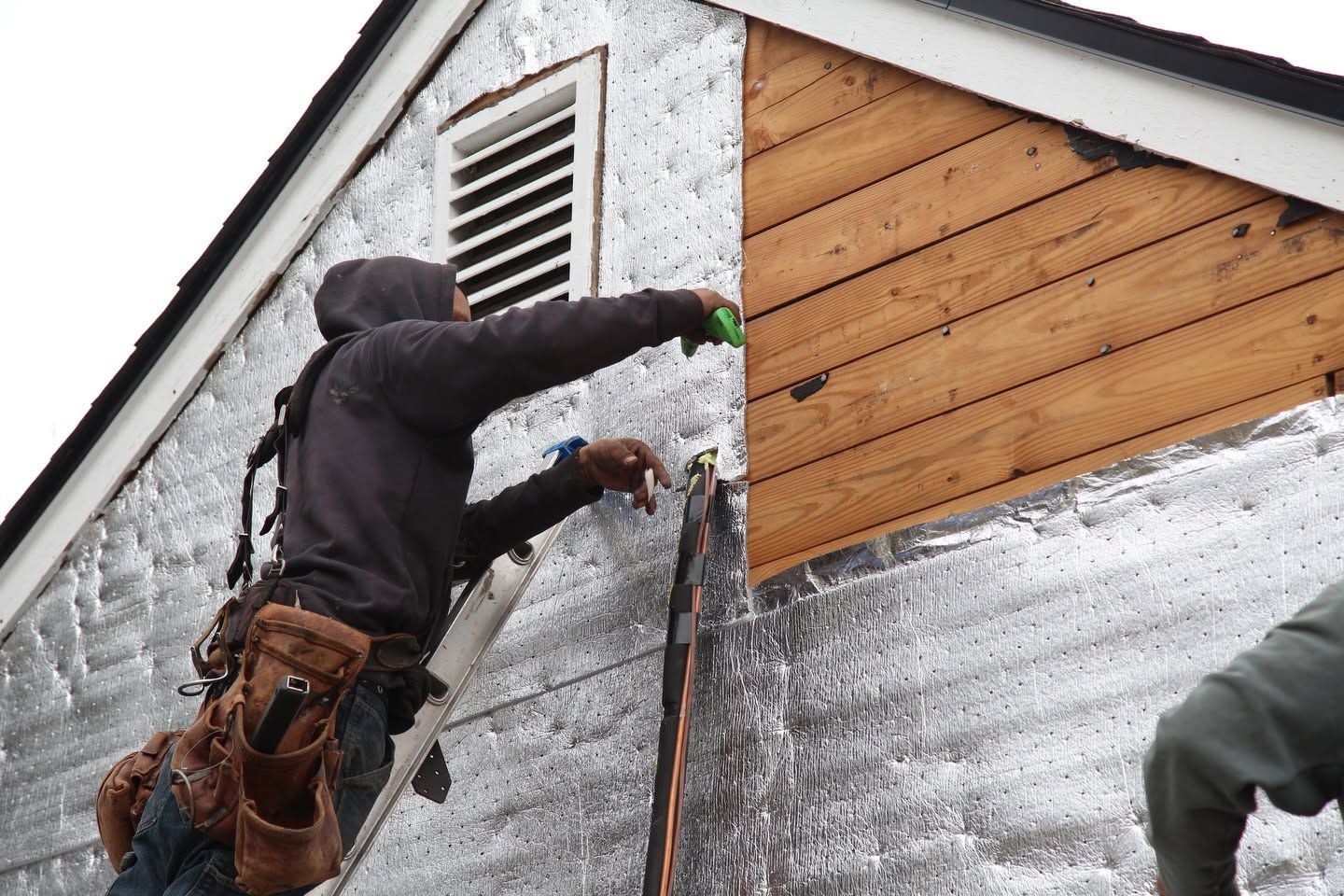
If you have watched a siding project start on a neighbor's home in Baltimore County, you have probably seen the crew wrap the entire house in a thin white material before a single piece of siding goes up. That material is house wrap, and it is one of the components of a siding installation that gets little attention but makes a significant difference in how the home performs afterward.
Understanding what house wrap does, why it is used, and what happens when it is skipped or installed carelessly helps you ask better questions when getting bids and gives you a clearer picture of what separates a thorough siding installation from a fast one.
What house wrap actually does
House wrap performs two functions that sound contradictory but work together. It blocks liquid water from penetrating the wall assembly while allowing water vapor to pass outward from the inside.
Maryland homes face real moisture pressure from multiple directions. Rain-driven water pushes against the siding surface, and any gap in the siding, around window and door frames, or at seams becomes an entry point. If liquid water reaches the sheathing and framing beneath, it creates the conditions for rot, mold, and structural degradation over time.
At the same time, interior humidity naturally migrates outward through the wall assembly. If that vapor gets trapped because the exterior barrier is too impermeable, it condenses on cold surfaces and causes damage from the inside out. House wrap is engineered to be permeable enough to let vapor escape while remaining impermeable to liquid water. That balance is what makes it useful, and it is why stapling plastic sheeting over the sheathing would make things worse rather than better.
House wrap as an air barrier
Beyond moisture management, house wrap reduces air infiltration through the wall assembly. Gaps and seams in the sheathing allow outdoor air to move through the wall, bypassing the insulation entirely and increasing heating and cooling loads. House wrap installed with properly lapped seams and taped penetrations creates a continuous air barrier that insulation alone does not provide.
In Maryland's climate, where summers are hot and humid and winters are genuinely cold, the energy contribution of a proper air barrier accumulates meaningfully. Baltimore County homes that had siding replaced with correct house wrap installation behind it frequently show noticeable improvement in heating and cooling performance over the previous assembly.
This is one reason a siding replacement done properly is a building envelope improvement rather than only a cosmetic upgrade. The visible result is new siding. The performance result is a wall that manages water and air the way it should.
Where installation quality separates good work from fast work
House wrap is required under Maryland building code for most new siding installations, but the quality of the installation varies enormously, and the difference lives in the details rather than in whether the wrap is present at all.
Seam lapping has to shed water downward. Upper courses lap over lower courses so water running down the wrap surface stays on the outside. Reversed laps, where a lower course overlaps an upper one, direct water into the wall rather than out of it. Taping seams rather than relying on lapping alone closes the air barrier and is where many fast installations cut time.
Flashing integration at windows, doors, and penetrations is the most consequential detail. The house wrap has to be lapped and taped correctly around each opening so water that gets behind the siding is directed down and out of the wall assembly rather than into it. Done right, this involves sill pans, properly sequenced flashing tape, and specific lapping order. Done fast, it involves cutting an X in the wrap and stapling it back. The second approach is common and it is where most post-installation water problems originate.
What happens when house wrap is skipped or poorly
installed
A siding installation without house wrap, or with wrap that has unsealed penetrations and reversed seam laps, leaves the wall assembly exposed to moisture infiltration at every gap in the siding. Over years that shows up as rot in the sheathing and framing, mold growth inside the wall cavity, and degraded insulation performance.
None of this is visible from the outside until it has progressed significantly, which is the core problem. The homeowner has no way to know the installation was inadequate until the damage reaches a point where it becomes apparent, typically through soft spots in the wall, interior staining, or discovery during a later project.
By then the remedy involves removing the siding that was installed, correcting the wrap and flashing, repairing the damage that accumulated, and reinstalling. That is substantially more expensive than doing it correctly the first time, which is why the detail questions are worth asking during the bidding process.
Vanguard serves Baltimore County and the surrounding area
Vanguard installs house wrap and siding throughout Baltimore County with a complete wall assembly approach. Every siding project we complete includes proper house wrap installation with taped seams and correctly sequenced flashing at all penetrations and openings.
If you are planning a project and want to understand what a complete installation involves, schedule a siding installation consultation in Baltimore County.
Siding installation in Baltimore County, MD
Vanguard handles siding installation from assessment through completion, including house wrap, flashing integration, trim detailing, and finish work.
Contact Vanguard to discuss siding installation in Baltimore County, MD.
Frequently Asked Questions
Is house wrap required for siding installation in Baltimore County?
Maryland building code requires a water-resistive barrier for most new siding installations. On retrofit projects, requirements vary by how the work is permitted and inspected. Regardless of minimum code, house wrap provides real performance benefits in Maryland's climate, and skipping it to save time typically creates moisture and air infiltration problems that become expensive to address after siding is installed.
What makes house wrap installation good versus poor?
The details. Seams must lap so upper courses overlay lower ones, shedding water outward rather than directing it in. Seams should be taped rather than relying on lapping alone. Most important is flashing integration at windows and doors, which requires sill pans and correctly sequenced flashing tape. Cutting an X in the wrap and stapling it back is where most post-installation water problems begin.
Can house wrap be added without replacing all the siding in Baltimore County?
No. House wrap goes behind siding on the sheathing, so adding it requires removing the existing siding. If your current siding is still serviceable but you want the moisture and energy benefits of proper wrap, a full siding replacement is the practical path. Some Baltimore County homeowners do this when energy costs run high or water infiltration signs appear around windows.
How is house wrap different from a vapor barrier?
They serve opposite purposes and should not be confused. A vapor barrier is typically polyethylene installed on the interior side of insulation to limit vapor moving outward from the conditioned space, and it is relatively impermeable. House wrap on the exterior side is vapor permeable so moisture entering the wall can escape outward. An impermeable exterior layer would trap moisture and cause the rot it should prevent.
Does house wrap improve energy efficiency in Baltimore County homes?
Yes. Acting as an air barrier, house wrap reduces infiltration that bypasses wall insulation and increases heating and cooling loads. In Maryland's climate, with both humid summers and genuinely cold winters, reducing that infiltration improves HVAC efficiency measurably. The gain is largest in homes whose old siding was installed without any effective air barrier behind it.
How long does house wrap last behind siding in Maryland?
Properly installed house wrap is designed to last the life of the siding, which for quality products in Maryland runs 20 to 40 years depending on material. The wrap is protected from UV and physical damage by the siding itself, and the conditions that would degrade it are exactly what it prevents. Poor installation allowing persistent moisture intrusion is the main factor that shortens its life.